

Porcelain vs Tin Signs: What’s the Difference, and Do Porcelain Signs Rust?
Shop for garage signs online and you will see two words over and over: porcelain and tin. With porcelain vs tin signs, from a few feet away they can look a lot alike. Hold one of each, though, and the difference is obvious. One is a thin printed sheet of metal. The other is a heavy steel plate covered in glass.
So here is a plain guide to porcelain vs tin signs: what each one is, how they hold up, whether porcelain signs rust, and why they cost more.
Porcelain vs tin signs: the short answer
A porcelain sign is steel coated with powdered glass that a kiln melts onto the metal. Each color is its own layer of glass. A tin sign is a thin sheet of metal with the picture printed or painted on top. Porcelain is heavier, glossier and far more weather-resistant. Tin, on the other hand, is lighter and cheaper.
What is a porcelain sign?
“Porcelain” on a sign does not mean the dishes in your cupboard. It means porcelain enamel, also called vitreous enamel: glass bonded to metal at high heat. The Porcelain Enamel Institute describes it as a form of glass fused to metal, fired at temperatures that generally range from about 1,100 to 1,600 degrees Fahrenheit. Inside the kiln, the glass powder melts and bonds with the steel, so the color is not sitting on top of the metal the way paint does. Instead, it becomes part of the surface.
It is the same tough finish you find on bathtubs, stoves and washing machine drums. On a sign, it also gives you deep, glossy color that resists fading, scratching and stains. Every sign in our shop is real porcelain: fired glass enamel on steel.
In short, here is the process. First, workers cut and clean the steel and fire on a base coat of glass. Then they add each color through a stencil and fire it again, one layer at a time. That is why you can often feel a slight edge where two colors meet. For the full story, see our guide to the history of vintage porcelain signs and how they are made.
What is a tin sign?
Despite the name, most tin signs are thin sheet steel with a tin coating, and some are aluminum. Makers print, paint or screen the design onto the surface, usually with a clear coat over it. Tin signs are light, they bend easily, and many have rolled edges or embossed lettering.
They are fine for a quick bit of color indoors. Over time, though, printed ink can fade in sunlight, the surface scratches, and the thin metal dents if it gets bumped.
Porcelain vs tin signs at a glance
| Porcelain sign | Tin sign | |
|---|---|---|
| Surface | Glass fired onto steel | Ink or paint on thin metal |
| Feel | Heavy, rigid, smooth and glossy | Light and flexible |
| Color | Deep and fade-resistant | Can fade in sunlight |
| Scratches | Very hard surface | Scratches more easily |
| Outdoors | Built for weather | Best kept indoors |
| Price | Higher | Lower |
Do porcelain signs rust?
The glass itself cannot rust. That is the whole reason companies used porcelain enamel on signs that hung outside gas stations and general stores for years. In fact, many of the classic gas station logos people know best first hung on porcelain for exactly that reason. As long as the enamel is whole, it seals the steel underneath off from air and water.
However, the steel can rust anywhere it is bare. That usually means three places:
- Chips. If you drop or hit a sign, the glass can chip and leave bare steel.
- Mounting holes. Screws that are too tight can crack the enamel around a hole.
- Edges. Cut edges and corners take the most bumps.
To keep your sign looking good, hang it with a rubber or nylon washer under each screw, do not crank the screws down hard, and wipe it with a soft damp cloth instead of anything abrasive. Our guide to hanging porcelain signs walks through it step by step.
On the rust question, porcelain vs tin signs is an easy call. Tin signs rust too, and often sooner, because a scratch through the thin printed coat goes straight to the metal.
Are porcelain signs magnetic?
Yes. Because vintage porcelain signs have a steel base, a magnet will stick to them, though the glass layer makes the grip a little weaker. Most tin signs are steel too, so a magnet sticks to them as well. Aluminum signs are the exception. So when you compare porcelain vs tin signs, a magnet only tells you there is steel inside. It cannot tell you which one you have.
Why do porcelain signs cost more than tin signs?
It comes down to materials and time. A porcelain sign needs:
- Heavier steel than a printed tin sign
- A separate stencil for each color
- A trip through a hot kiln for the base coat and again for each color layer
- Careful handling between firings, since a flaw in one layer can ruin the sign
A printer can make a tin sign in one pass. A porcelain sign, however, takes shape one layer of glass at a time. Even so, vintage porcelain signs do not have to break the bank. In fact, most of the signs in our shop cost under $150.
Porcelain or tin signs for the garage: when does tin make sense?
If you want a cheap, lightweight sign for a dry room and you do not mind replacing it in a few years, a tin sign is fine. A garage is tougher than it looks, though. Heat, humidity, fumes and the odd flying wrench are hard on printed metal. By contrast, vintage porcelain advertising signs hold up to all of that, and they look just as sharp years later.
Some favorites for garage walls:
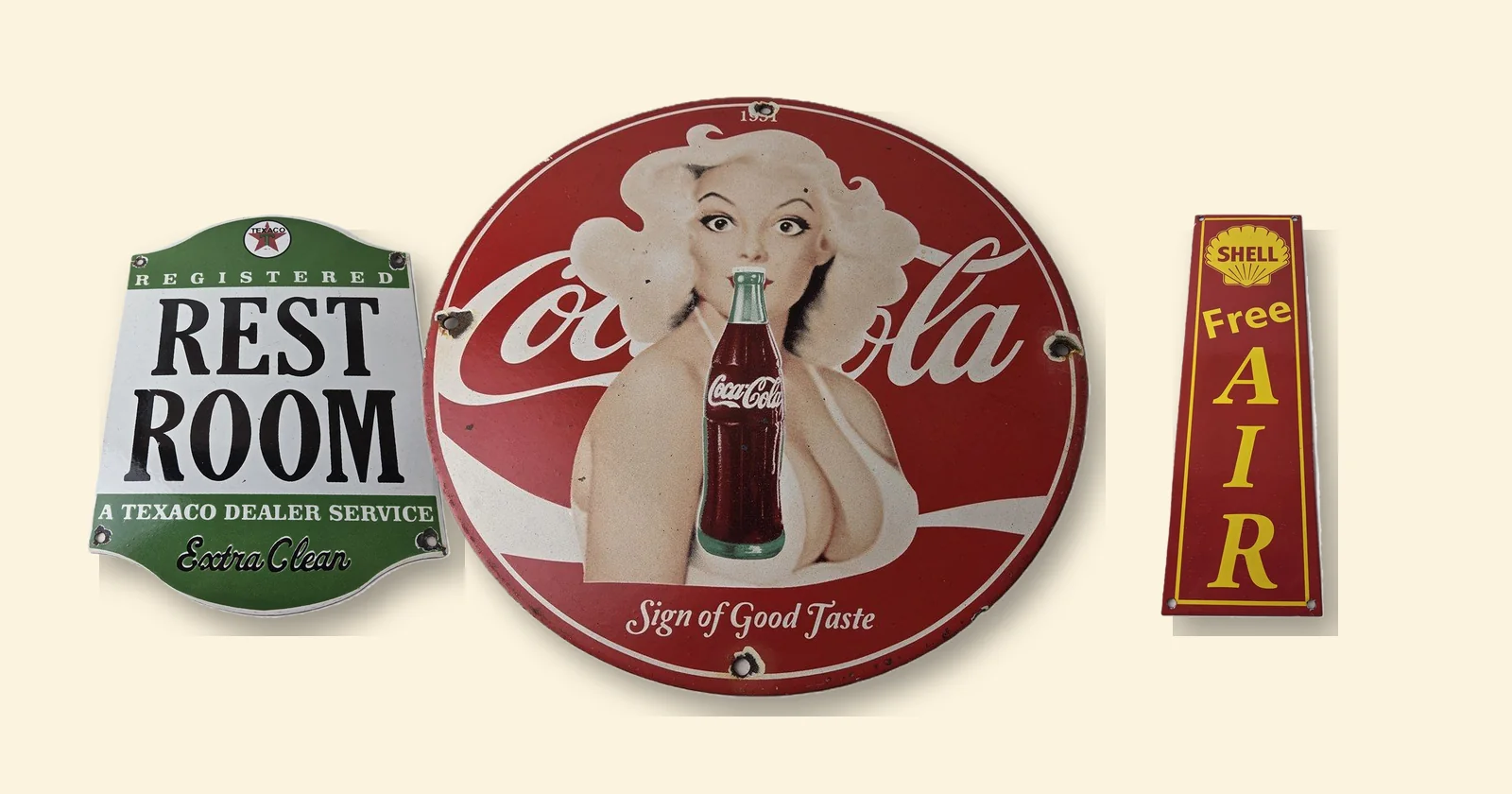
- Shell Free Air Porcelain Sign, a tall red panel that fits next to a door
- Texaco Registered Rest Room Porcelain Sign, a fun one for the shop bathroom
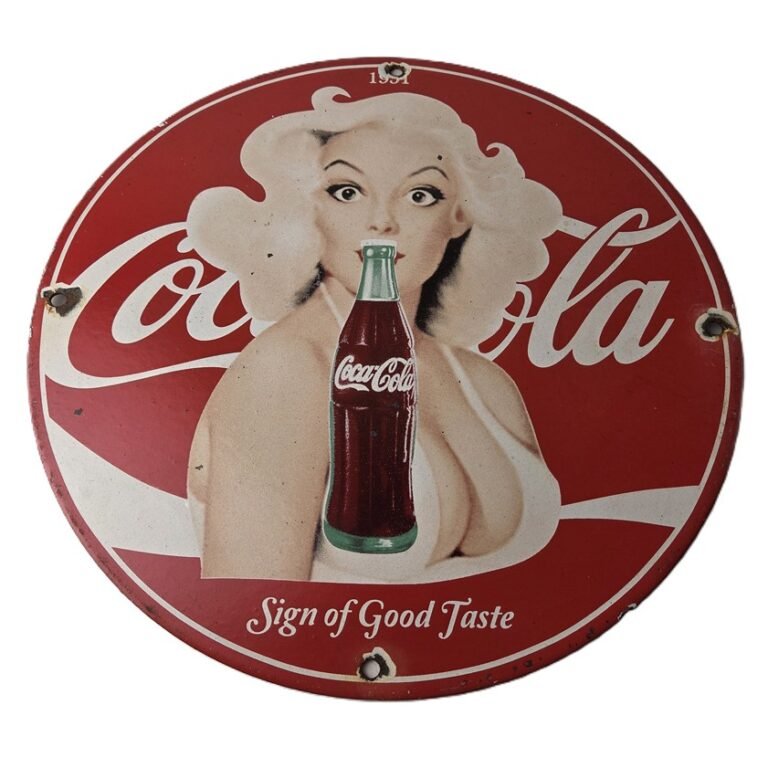
- Coca-Cola Gas Pump Plate Porcelain Sign, for a pop of red over the fridge
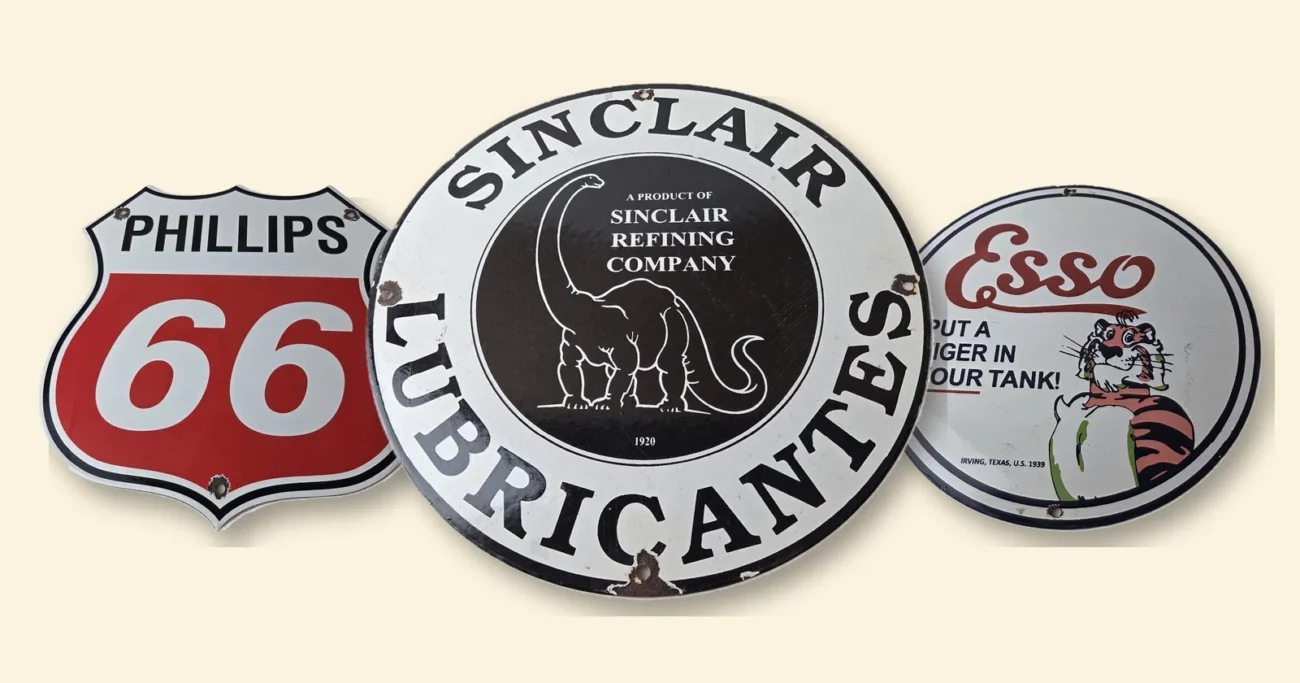
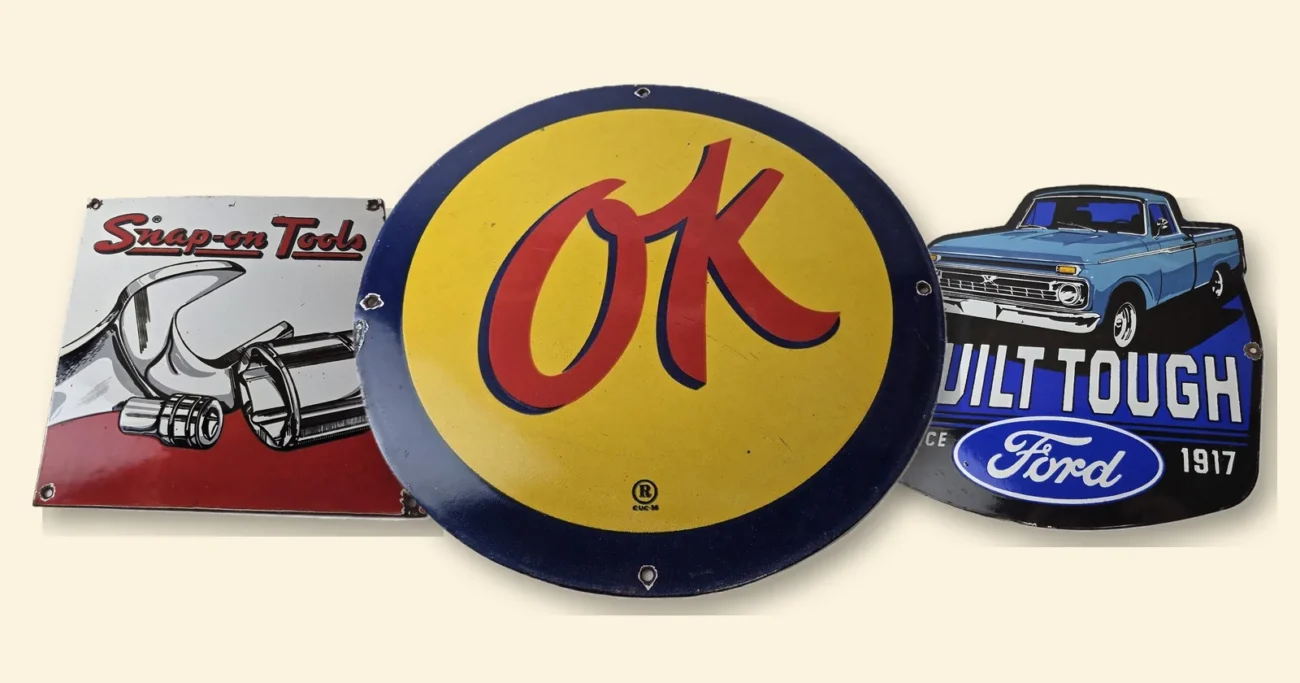
Or browse by theme: gas and motor oil signs, automobile signs, motorcycle signs and soda signs.
FAQ: porcelain vs tin signs
Do porcelain signs rust?
The glass surface does not rust. But the steel underneath can rust where the enamel has chipped, at mounting holes or along bare edges. Hang the sign gently and keep chips from getting wet, and it will stay looking good.
Are porcelain signs magnetic?
Yes. They have a steel base, so a magnet will stick, though a little more weakly than on bare metal.
Why are porcelain signs so expensive?
Each color is a separate layer of glass that has to go through a kiln, on heavier steel, with a stencil for every color. That takes more material and much more time than printing a tin sign.
Are porcelain signs still made?
Yes. Makers still use porcelain enamel for signs, building panels and appliances, and every sign in our shop is real porcelain made with fired glass enamel on steel.
Pick a sign that lasts
In the end, if you want a garage sign that still looks bright years from now, go with porcelain. Browse our full collection of vintage porcelain signs and find the brand that fits your wall. Shopping for someone else? Our list of gifts for car guys can help.


Add a review
Your email address will not be published. Required fields are marked *