

50s Diner Kitchen Decor: Colors, Chrome and Signs
A 50s diner kitchen feels good the minute you walk in. There is chrome, a splash of cherry red, a checkerboard floor and a counter where somebody is always leaning with a cup of coffee. You do not have to gut your house to get there. Good 50s diner kitchen decor comes down to a few choices: the right colors, a couple of chrome and vinyl pieces, the right lighting and the signs on the wall. This guide walks through each one, with ideas that work in a real family kitchen.
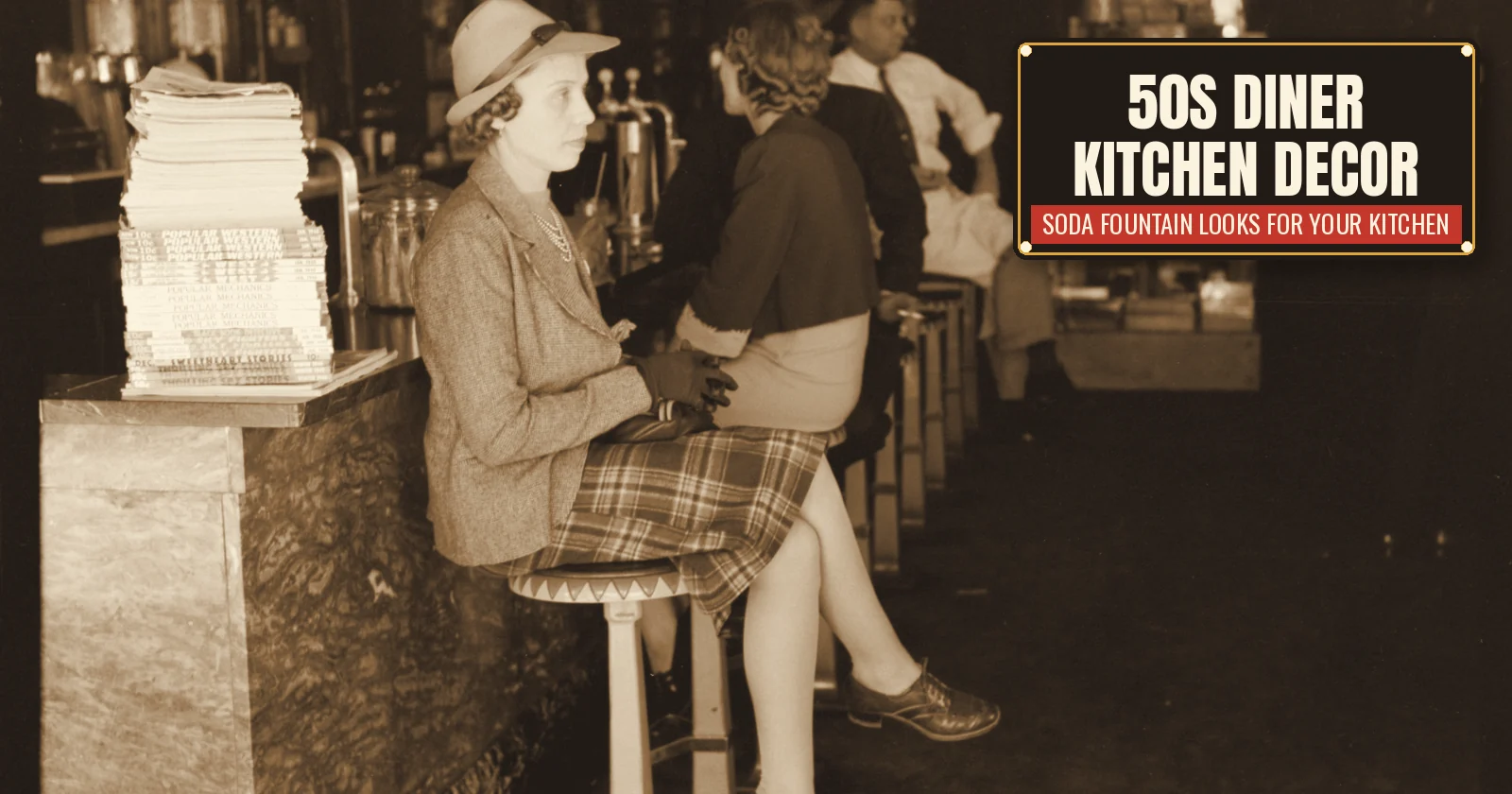
The photo at the top was taken in 1939 by Russell Lee at a soda fountain in Taylor, Texas, a small town northeast of Austin. A woman in a felt hat, tweed jacket and plaid skirt sits on a round counter stool with her gloved hands in her lap. A tall stack of magazines rests on the marble counter beside her, and a man in a white shirt and tie sits at the far end of the row. Every detail you want in a diner kitchen, the stools, the counter, the soda taps, is right there a decade before the 1950s even started.
Start 50s diner kitchen decor with color
Color does most of the work. Pick two main colors and one accent, and repeat them around the room:
- Red, white and chrome. The classic diner look. Red vinyl, white counters and plenty of shine.
- Turquoise and cream. Seafoam and aqua were everywhere in 1950s kitchens, on appliances, dishes and tile.
- Pink and black. Bolder, and great in a small kitchen or a breakfast nook.
- Mint green and yellow. Softer, closer to a real 1950s home kitchen than a roadside diner.
If you are nervous about color, use it on things you can change: chair cushions, a mixer, dish towels, a canister set. Keep the cabinets white and let the small stuff carry the theme.
Floors, counters and seating
The black and white checkerboard floor is the most recognizable part of any diner. Vinyl tile or a peel-and-stick version laid on the diagonal gives the look for very little money, and it is easy to clean. If you cannot change the floor, a checkerboard runner in front of the sink does the trick.
For counters, white or speckled laminate with a metal edge looks right, and so does butcher block. The big piece of furniture is the dinette set: a laminate table with a chrome band around the edge and chrome chairs with vinyl seats. You can find originals at estate sales, and new ones are easy to buy. If your kitchen has an island or a peninsula, swap the stools for chrome counter stools with round seats like the ones in the photo, done in red vinyl.
Lighting, clocks and the little details
Diners were bright. Use a couple of pendant lights over the island or table, in chrome or white glass. Under-cabinet lights help too. Then add a few details that tell people where they are:
- A round wall clock in red or chrome over the door.
- A chalkboard or letter board menu with tonight’s dinner on it.
- Glass soda bottles, a ketchup and mustard squeeze set and a napkin dispenser on the counter.
- Milkshake glasses and a malt mixer if you love ice cream.
- A jukebox or a small record player in the corner for the full effect.
Mixing diner looks with a modern kitchen
Most of us are not living in 1955, and that is fine. The best diner kitchens mix one or two strong old touches with the modern things you need. A stainless steel fridge actually fits right in, since diners were full of steel and chrome. A modern range can stay, too. Here are a few ways to blend the two without the room feeling like a movie set:
- Pick one hero piece. A red dinette set, a turquoise mixer or a big sign over the table gives the room a focus. Let the rest stay simple.
- Use metal for the hardware. Swap cabinet knobs and pulls for polished chrome. It costs little and pulls the whole kitchen toward the diner look.
- Keep the counters clear. Diners looked clean and fast. A few glass jars and a napkin holder are enough.
- Repeat your accent color three times. For example, red stool seats, a red clock and a red sign. That small repeat makes the theme look planned.
If you have a breakfast nook or a basement kitchenette, that is the place to go all the way with a booth, a checkerboard floor and a wall full of signs. The main kitchen can stay a little quieter.
Signs for 50s diner kitchen decor
Every diner had signs: soda signs over the counter, burger signs on the walls, a drive-in sign out front. Porcelain advertising signs are the easiest way to finish a diner kitchen, and they are a smart choice for a kitchen because porcelain is glass enamel fused onto steel. Grease, steam and fingerprints wipe right off with warm soapy water.
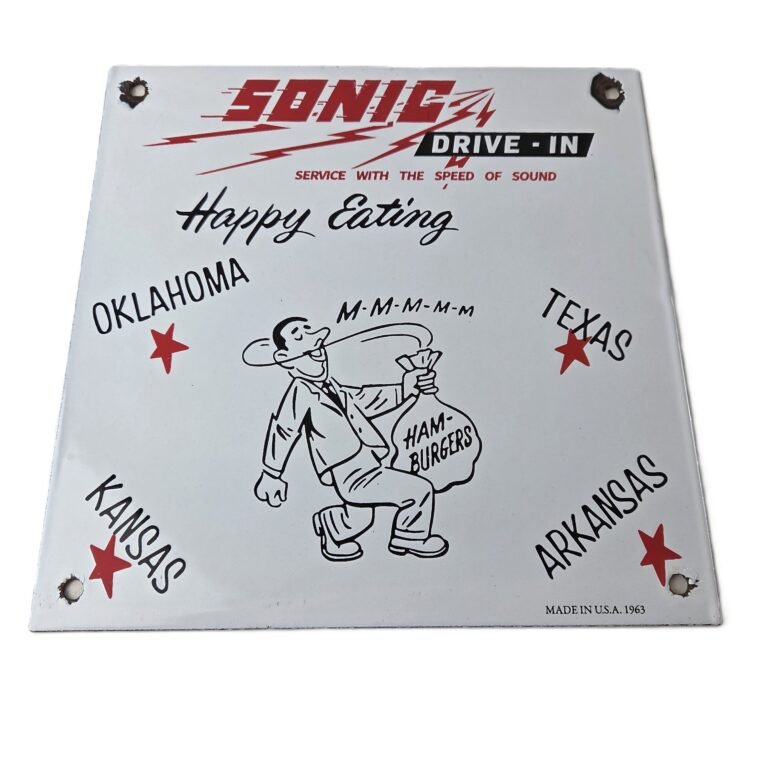
For the drive-in crowd, the Sonic Drive-In “Happy Eating” porcelain sign shows a smiling carhop carrying a big sack of “Ham-burgers,” with “Service with the Speed of Sound” across the top. It is 8 3/4 inches square, a good size between cabinets. Sonic got its start in Shawnee, Oklahoma, in the 1950s.
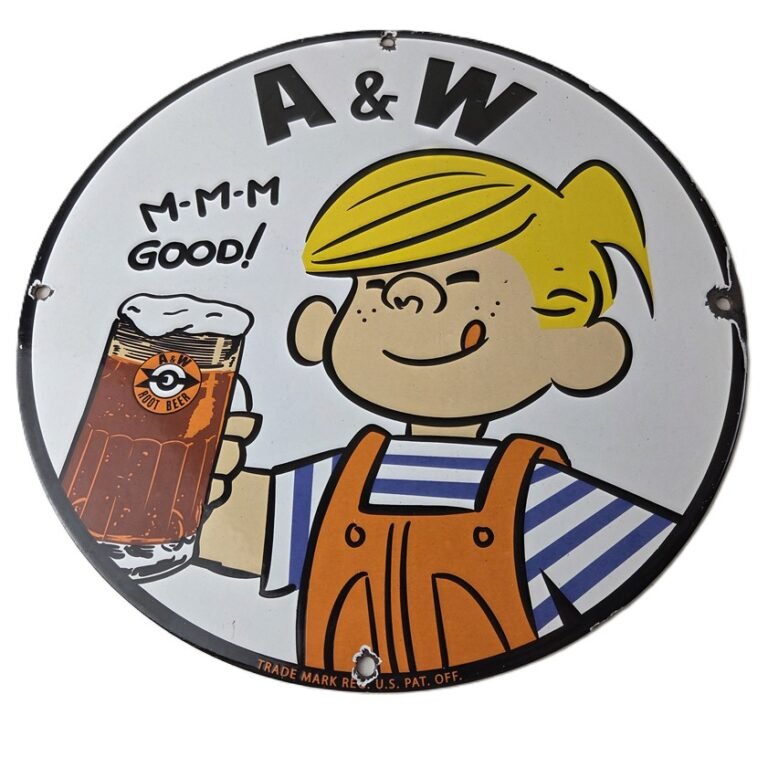
For a root beer float lover, the A&W Root Beer sign with Dennis the Menace shows Dennis holding up a foaming mug with “M-M-M Good!” beside him. Roy Allen sold his first root beer at a roadside stand in Lodi, California, in 1919, and A&W drive-ins spread across the country after the war.
A few more that fit a diner kitchen:
- The Kentucky Fried Chicken “Tender and Tasty” sign with the Colonel holding a drumstick.
- The Piggly Wiggly sign, a favorite for anyone raised in the South.
- The Orange Crush sign with Mickey and Pluto or the Squirt sign with the Squirt Boy for bright soda colors.
- The Kool-Aid Man sign for a kitchen where the kids hang out.
Our diner signs, food signs and soda signs have plenty more. For pairing ideas, see our guide to soda and beverage vintage porcelain signs.
How many signs, and where?
In a kitchen, less is more. Two or three vintage porcelain signs usually look better than ten. Good spots are the wall over a breakfast nook, the space above a doorway, the end of an island and the strip of wall above the upper cabinets. Keep signs a couple of feet from the stove so they stay out of the heat and splatter. For screws, anchors and spacing, our guide to hanging porcelain signs has the details. If the diner theme spills into the garage, our garage bar and home bar wall ideas pick up where this leaves off.
Shipping and returns
We ship from Houston, Texas. Flat $10 shipping on US orders, international shipping available at checkout. You have 30 days from delivery to return a sign. We pay the return shipping, and you get a full refund.
FAQ
What colors go with 50s diner kitchen decor?
Red, white and chrome is the classic choice. Turquoise and cream, pink and black, and mint green with yellow are all true to the 1950s too.
How do I make my kitchen look like a 50s diner on a budget?
Start with a checkerboard runner or vinyl floor tile, chrome stools or a dinette set, a round wall clock and two or three signs. Small appliances and dish towels in your accent color tie it together.
Are porcelain signs safe to hang in a kitchen?
Yes. Porcelain is glass fused to steel, so it wipes clean with soap and water. Keep signs a couple of feet from the stove to avoid direct heat and grease.
What signs did old diners have?
Diners and drive-ins hung soda signs, root beer signs, burger and chicken signs, ice cream signs and coffee signs, usually over the counter and near the door.
The featured photo is “Woman sitting at soda fountain, Taylor, Texas,” by Russell Lee, 1939, Farm Security Administration/Office of War Information Collection, from the Library of Congress, with no known restrictions on publication. You can see the full photo at the Library of Congress. For more on how diners came to be, see the history of the American diner.



Add a review
Your email address will not be published. Required fields are marked *