

Why Is Sinclair’s Logo a Dinosaur? The Stories Behind Classic Gas Station Logos
Pull into almost any small town and you can still spot them: the Sinclair dinosaur logo, an orange disc, a shield with a big 66. Gas companies designed their logos for drivers in a moving car. Many of them have barely changed in nearly 100 years. But why a dinosaur? Why 66? And where did that tiger come from?
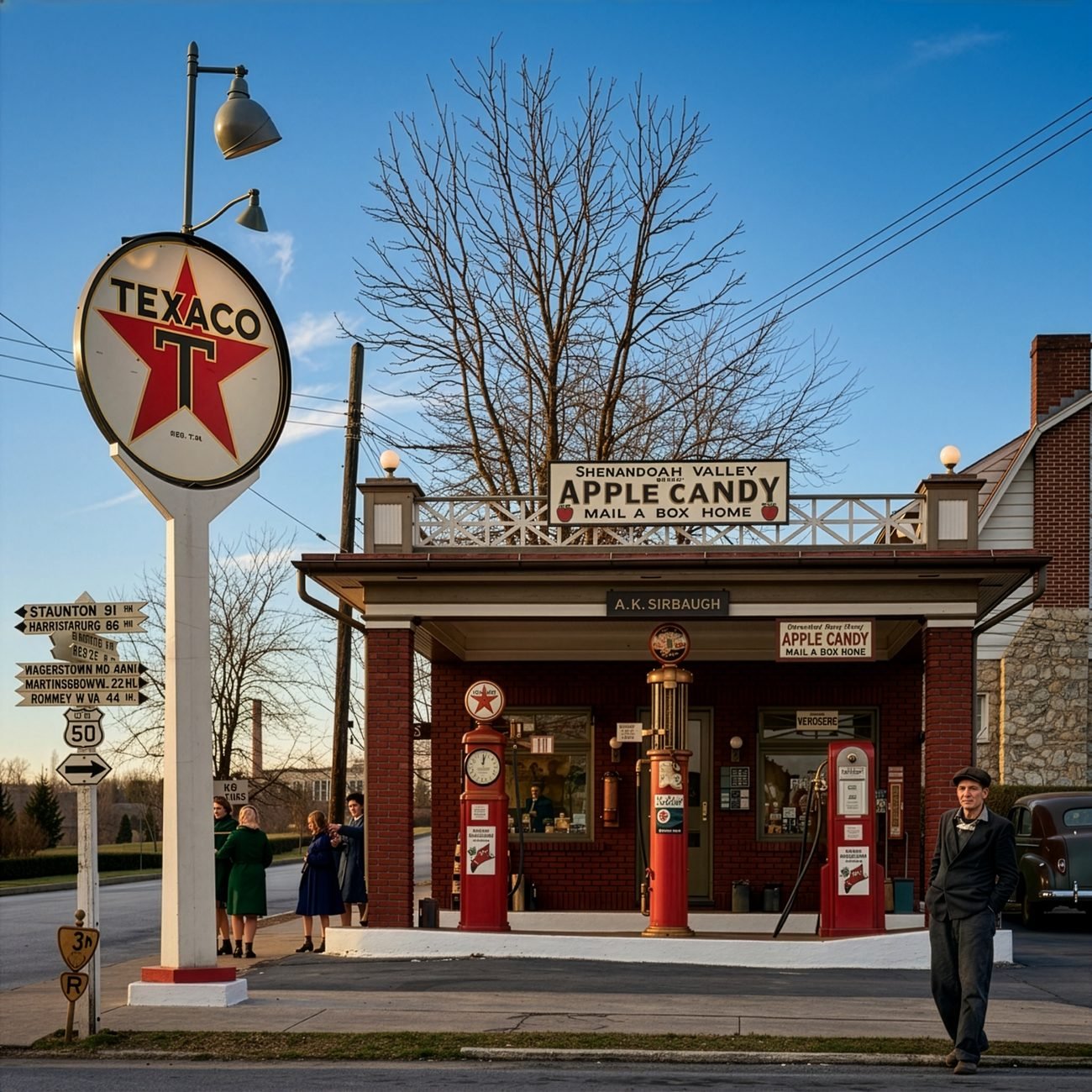
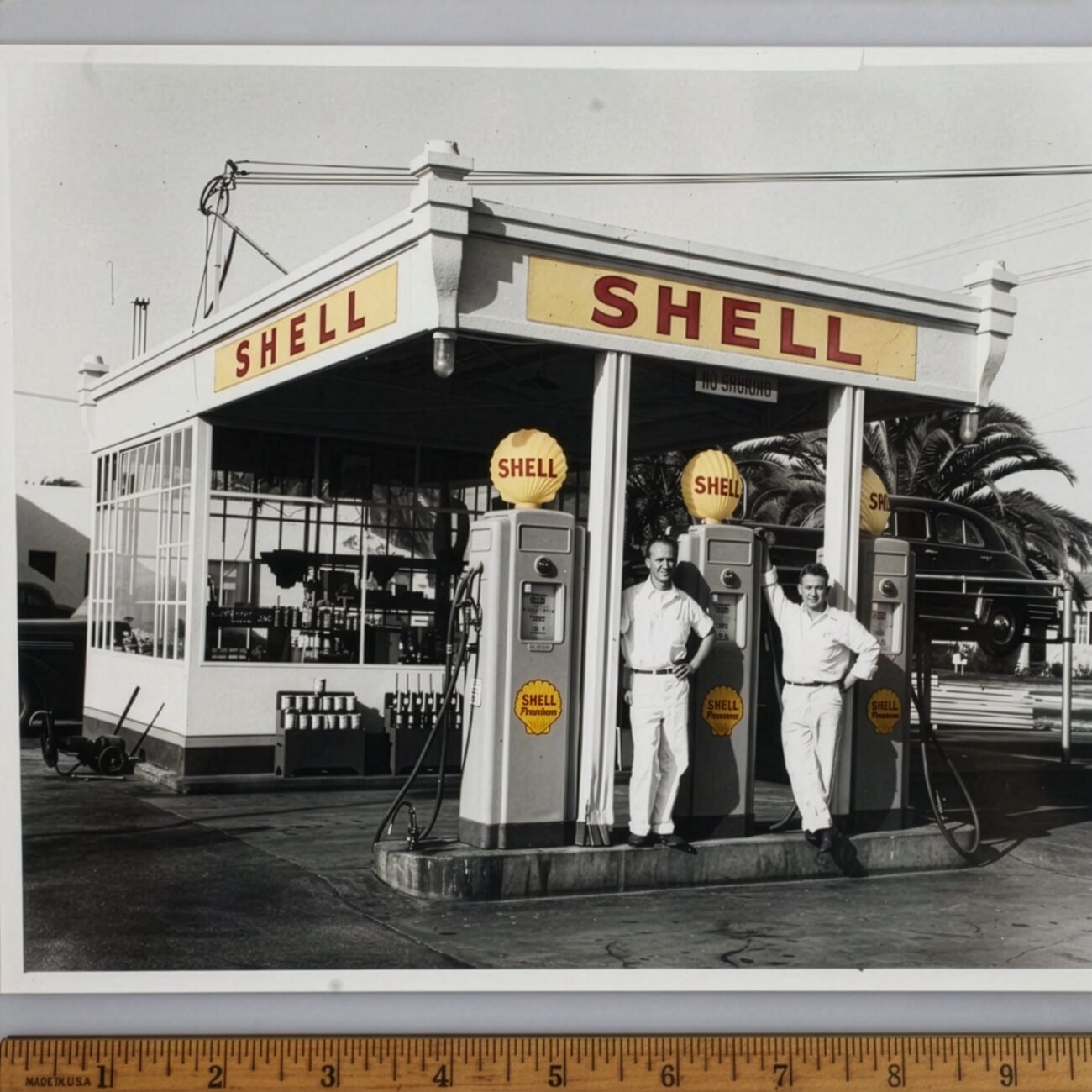
Here are the stories behind six classic gas station logos. We have already covered three other big ones in their own posts, so if you are curious about the red star, the seashell or the flying horse, read about Texaco, Shell and Mobil’s Pegasus.
Sinclair: why the logo is a dinosaur
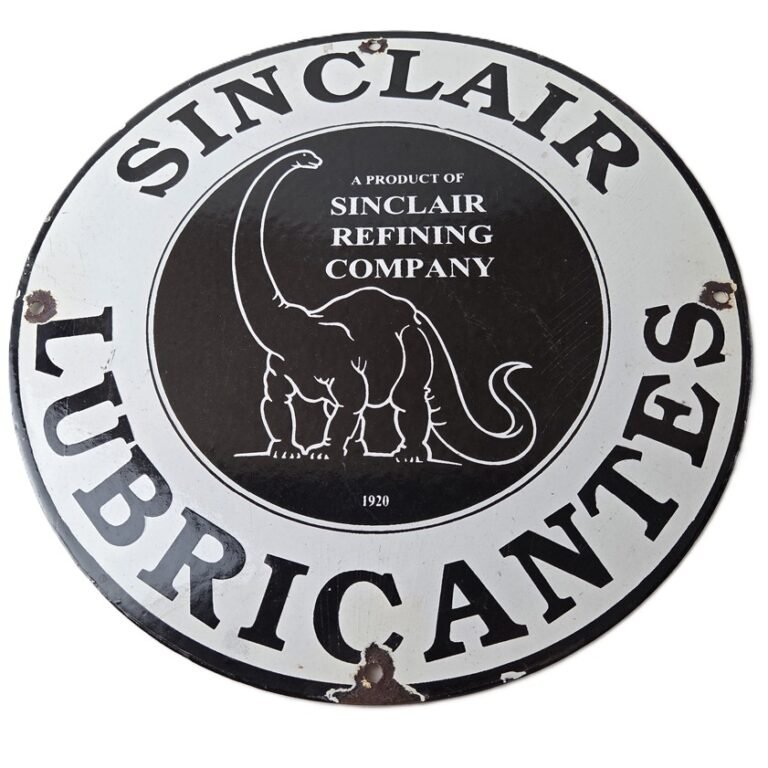
Harry F. Sinclair started Sinclair Oil in 1916. Then the dinosaur showed up in 1930, when the company ran an ad campaign featuring a dozen different dinosaurs. The idea was simple. Sinclair’s lubricants were refined from crude oil that formed in the Mesozoic era, the age of the dinosaurs. In other words, older oil meant better oil.
Of all those dinosaurs, one became the clear favorite with the public: the long-necked Brontosaurus, which scientists now call Apatosaurus. So Sinclair registered it as a trademark in 1932. Since then, the Sinclair dinosaur logo has been the company’s symbol ever since. He even has a name: Dino, pronounced “DYE-no.”
After that, Sinclair leaned into the idea in a big way. For example, it built a dinosaur exhibit for the 1933–34 Century of Progress world’s fair in Chicago. Later, life-size fiberglass dinosaurs were a hit at the 1964 New York World’s Fair. Today the parent company even trades on the New York Stock Exchange under the ticker DINO. You can read more on the Sinclair company history page.
See our Sinclair signs, including the Sinclair Dino Motor Oil Porcelain Sign.
Phillips 66: what the 66 means
Brothers Frank and L.E. Phillips founded Phillips Petroleum in Bartlesville, Oklahoma, in 1917. About ten years later, the company was ready to sell gasoline to drivers, and it needed a name for its new fuel.
The story goes that in 1927 a company car testing the new gas was cruising near Tulsa on Route 66 when someone noticed the speedometer read 66 miles per hour. The name stuck. In addition, company lore adds that the fuel’s gravity was also close to 66, which made the number feel even more right. The first Phillips 66 station opened on November 19, 1927, in Wichita, Kansas.
Next, the shield logo came in 1930, and its shape matched the U.S. highway route markers that drivers saw every day. A road sign for a road fuel was a smart idea, and like the Sinclair dinosaur logo, it was easy to remember. Today Phillips 66 has its headquarters in Houston, Texas, and the shield is still on its stations. Our Route 66 history post has more about the highway itself.
Shop the Phillips 66 Gas Pump Service Station Porcelain Sign.
Gulf: the orange disc
Gulf Oil grew out of the 1901 Spindletop gusher near Beaumont, Texas, the strike that kicked off the Texas oil boom. The company claims a famous first: it opened what many people call the first drive-in gas station, in Pittsburgh, in 1913.
The orange disc logo dates to 1920. Why orange? According to Gulf’s own brand history, in the early 1900s fuel suppliers in New Orleans told their products apart by color, and orange was the one nobody else was using. So Gulf took it, and the bright orange circle with blue letters became one of the easiest logos to spot from the road. Racing fans know the orange-and-blue colors well, too. Much like the Sinclair dinosaur logo, the Gulf disc works because drivers can read it at a glance.
Esso: “Put a Tiger in Your Tank”
Esso is simply the letters “S.O.” said out loud, short for Standard Oil. Standard Oil of New Jersey, the company that later became Exxon, used the name, and Esso stations still operate in Canada and many other countries.
The tiger is older than most people think. Esso first used a tiger as a mascot in Norway around the turn of the 20th century, and it came back in the 1950s. Then, in 1959, a Chicago copywriter named Emery Smith came up with the line “Put a Tiger in Your Tank.” It took off. By 1964, Time magazine called it “The Year of the Tiger Along Madison Avenue,” and drivers bought around 2.5 million fake tiger tails to tie on their gas caps.
Browse our Esso signs, like the Esso Tiger Gas Station Porcelain Sign.
Conoco: the red triangle
Conoco is one of the oldest names in American oil. It began in 1875 in Ogden, Utah, as the Continental Oil and Transportation Company, founded by Isaac E. Blake, and it was one of the first petroleum marketers in the West.
However, the famous red triangle actually came from another company. In 1929, Continental merged with Marland Oil of Ponca City, Oklahoma, and kept Marland’s red triangle, swapping in the Conoco name. Conoco merged with Phillips Petroleum in 2002 to form ConocoPhillips, and as a result, today the Conoco brand is part of the Phillips 66 family.
Sunoco: the diamond and the arrow
Sunoco’s story starts in 1886, when Joseph Newton Pew and Edward O. Emerson, partners in a Pittsburgh natural gas company, branched out into oil. They made the Sun Oil Company official on March 17, 1890. Sun opened its first service station in Ardmore, Pennsylvania, in the 1920s.
The first logo was the Sunoco name on a simple diamond. Then, in the 1930s, the company added an arrow that cut straight across the diamond. Later, in 1962, Sunoco turned the arrow on a diagonal and sharpened the lettering, and that is the look most people know today. Sunoco has been the official fuel of NASCAR since 2004.
Shop the Sunoco Racing Fuels Porcelain Sign, or see more brands in our other gasoline signs.
Why gas station logos were made in porcelain
Gas companies needed signs that could stand up to sun, rain and road dust for years, so many of them turned to porcelain enamel. That is why you see the Sinclair dinosaur logo, the Gulf disc and the Phillips 66 shield on so many porcelain signs. Our porcelain signs use the same basic method, with glass enamel fired onto steel. If you want the full story, read our guide to how porcelain signs are made.
FAQ: the Sinclair dinosaur logo and more
Why is Sinclair’s logo a dinosaur?
The Sinclair dinosaur logo goes back to 1930, when Sinclair started using dinosaurs in its ads to point out that its oil came from crude formed in the age of the dinosaurs. The Brontosaurus (today’s Apatosaurus) was the public’s favorite and became a registered trademark in 1932.
What is the name of the dinosaur in the Sinclair logo?
His name is Dino, pronounced “DYE-no.”
What does the 66 mean in Phillips 66?
In 1927 a test car using the new fuel hit 66 miles per hour on Route 66 near Tulsa, Oklahoma. The company chose the name Phillips 66, and the shield logo followed in 1930.
Why is Esso called Esso?
Esso is the sound of the letters “S” and “O,” short for Standard Oil.
Bring a classic logo home
A gas station logo like the Sinclair dinosaur logo gives a garage, shop or game room instant road-trip character. Browse all of our vintage porcelain signs from the big gas brands and find the logo with the best story for you.


Add a review
Your email address will not be published. Required fields are marked *